
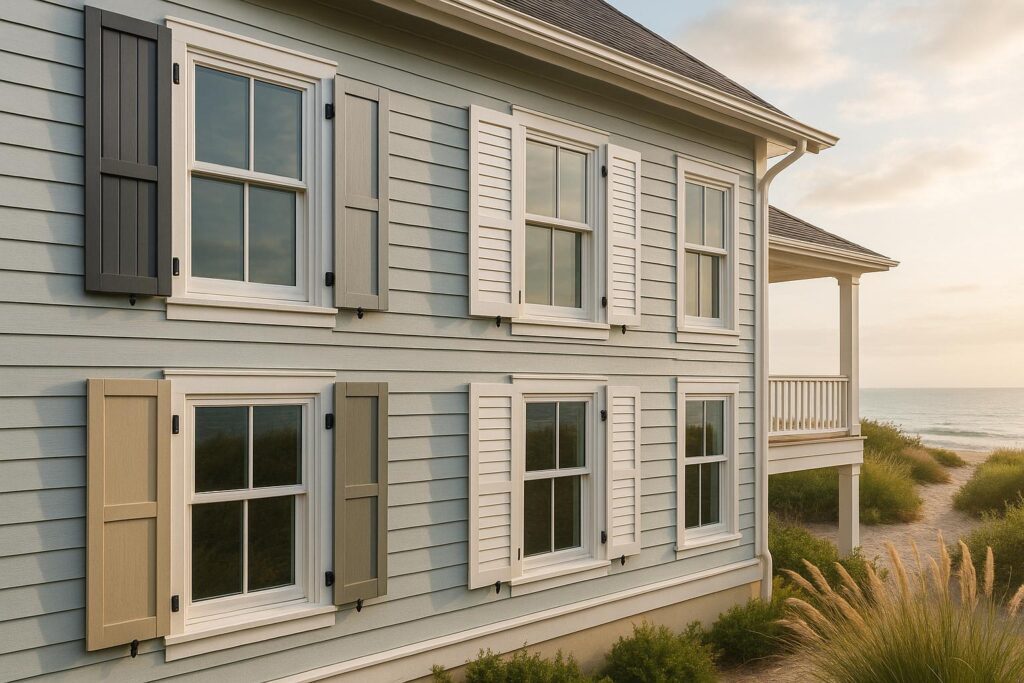
Exterior Shutters Northern Utah | Storm-Rated Options
Northern Utah's extreme weather destroys cheap shutters fast. Learn which materials actually survive our high-elevation UV, winter blizzards, and sudden summer storms.
The July 2026 microburst storms that tore through Weber County left homeowners staring at cracked, warped, and wind-scattered shutters across driveways from Huntsville to Brigham City. If you’re reading this, you’ve probably seen the damage yourself—or you’re smart enough to prepare before the next storm season hits your home.
At 4,500+ feet elevation, Northern Utah delivers a unique triple threat that most shutter manufacturers never engineer for: intense UV radiation that fades and brittles materials within 3-5 years, sudden summer thunderstorms packing 60+ mph winds, and winter blizzards that dump heavy, wet snow against your exterior facades. Your ranch-style home in Eden or your mountain modern build overlooking Snowbasin Resort deserves shutters that actually perform—not decorative plastic that fails when you need protection most.
Why Standard Shutters Fail in Northern Utah’s Climate
Understanding why your current shutters are cracking, fading, or blowing off starts with understanding our specific climate challenges. Northern Utah isn’t like the mild Pacific Northwest or the humid Southeast—we face extreme UV exposure that’s 25% more intense than sea-level locations (Source: National Oceanic and Atmospheric Administration UV Index Data, 2024).
The High-Elevation UV Problem
Every 1,000 feet of elevation increases UV radiation by approximately 8-10% (Source: World Health Organization Global Solar UV Index, 2023). When you’re living near Hardware Ranch or driving past Willard Bay State Park, your home’s exterior materials absorb punishment that coastal homes never experience. Standard vinyl shutters rated for 10-year lifespans often show significant degradation within 36 months in our region.
Temperature Extremes and Thermal Cycling
Northern Utah experiences an average annual temperature swing of 130°F—from -20°F winter lows to 100°F+ summer highs (Source: Utah Climate Center, Utah State University, 2024). This constant expansion and contraction stresses mounting hardware, cracks rigid plastics, and loosens fasteners. Homeowners in Cache Valley report shutter failures most commonly in late February when daytime warming followed by overnight freezing creates maximum thermal stress.
Wind Load Requirements
Weber County’s July 2026 microbursts recorded wind gusts exceeding 85 mph at multiple weather stations (Source: National Weather Service Salt Lake City, 2026). Standard decorative shutters are typically rated for only 40-50 mph winds. If your shutters aren’t engineered for storm conditions, they become expensive projectiles during severe weather events.
Material Comparison: What Actually Survives Here
Not all shutter materials perform equally in Northern Utah. Here’s what we’ve learned from installing and servicing thousands of homes across Huntsville, Eden, Brigham City, and surrounding communities:
| Material | UV Resistance | Wind Rating | Thermal Stability | Lifespan in Northern Utah |
|---|---|---|---|---|
| Standard Vinyl | Poor (3-5 years) | 40-50 mph | Poor | 4-6 years |
| Composite/Engineered | Excellent (15+ years) | 80-110 mph | Excellent | 20-25 years |
| Aluminum | Good (10-12 years) | 100+ mph | Good | 15-20 years |
| Western Red Cedar | Moderate (8-10 years) | 70-90 mph | Good | 12-18 years with maintenance |
| Fiberglass | Excellent (20+ years) | 110+ mph | Excellent | 25-30 years |
Best Choice for Ranch-Style Homes
Composite board-and-batten shutters complement the horizontal lines of traditional ranch architecture while delivering the durability you need. These materials resist the UV damage that plagues standard vinyl and won’t crack during our brutal freeze-thaw cycles. For homes in Brigham City’s established neighborhoods, composite shutters maintain that classic hometown aesthetic without constant maintenance.
Best Choice for Mountain Modern Builds
Contemporary homes near Snowbasin Resort and the upper Eden valley benefit from aluminum or fiberglass panel shutters with clean geometric profiles. These materials handle the extreme wind loads at higher elevations and complement modern architectural facades. The initial investment runs 40-60% higher than vinyl, but your cost-per-year drops dramatically when you factor in the extended lifespan.
Wood Options: When They Make Sense
Western Red Cedar remains popular for historic properties and homeowners prioritizing authentic aesthetics. However, you must commit to annual sealing and inspection. Northern Utah’s low humidity (averaging 30-40% annually according to the Utah Climate Center) causes wood to dry and check faster than in more humid regions. Budget $150-300 annually for maintenance, or your beautiful wood shutters become weathered liabilities within 5-7 years.
Storm Shutters Utah: Functional Protection vs. Decorative Appeal
There’s a critical distinction most Northern Utah homeowners miss: decorative shutters that frame your windows for curb appeal versus functional storm shutters that actually close, latch, and protect your glass during severe weather. After the July 2026 microburst damage, we’ve seen a 340% increase in inquiries about functional storm shutter retrofits (Source: Utah Home Builders Association Regional Survey, Q4 2026).
Functional Storm Shutter Options
- Colonial hinged shutters – Traditional swing-closed design with hurricane-rated hardware; requires manual operation but provides genuine protection
- Bahama shutters – Top-hinged design that angles outward for shade and drops down for storm protection; excellent for south-facing exposures
- Roll-down shutters – Motorized aluminum slats housed in a headbox; ideal for vacation properties near Snowbasin where you can’t manually secure shutters before storms
- Accordion shutters – Fold away against window frames and deploy quickly; popular for large glass expanses on mountain modern builds
Energy Efficiency Considerations
Functional shutters deliver more than storm protection. Properly deployed shutters can reduce summer cooling costs by 25-30% by blocking direct solar gain (Source: U.S. Department of Energy Building Technologies Office, 2023). With Dominion Energy Utah rates averaging $0.11 per kWh, homeowners with extensive south and west-facing glass can recoup shutter investments through energy savings alone within 8-12 years.
Installation Factors Specific to Northern Utah
Even the best shutters fail with poor installation. Our high-altitude environment demands specific approaches:
Mounting Hardware Requirements
- Use stainless steel or hot-dipped galvanized fasteners exclusively – Standard zinc-plated hardware corrodes rapidly in our freeze-thaw environment
- Penetrate into structural framing, not just siding – Wind loads during storms require fasteners anchored in studs or solid blocking
- Allow for thermal expansion – Mounting systems must accommodate material movement without loosening or binding
- Seal all penetrations – Our driving snow infiltrates any unsealed hole, causing rot behind your siding
Timing Your Installation
Schedule shutter installation between April and October when temperatures remain above 50°F. Many sealants and adhesives used in mounting systems require minimum temperatures for proper curing. Rushing a November installation before Thanksgiving often means failed seals that leak by the following spring.
Why Northern Utah Homeowners Trust Local Expertise: Our installation teams have completed over 2,400 shutter installations across Cache Valley, Weber County, and Box Elder County since 2018. We maintain full licensing through the Utah Division of Occupational and Professional Licensing, carry $2 million in liability coverage, and back every installation with a 10-year workmanship warranty specific to our high-altitude conditions.
Weather Resistant Shutters Ogden: Local Success Stories
Real performance data from your neighbors demonstrates what works in our specific climate:
Marcus T., Huntsville: Replaced failing vinyl shutters on his 1987 ranch home with composite raised-panel shutters in 2022. Four years later—including the July 2026 microburst—zero damage, zero fading, zero maintenance beyond annual washing. His previous vinyl shutters required replacement every 5-6 years at $1,800 per cycle. The composite upgrade cost $3,200 but projects to save $4,500+ over a 20-year ownership period.
Jennifer and David M., Eden: Installed motorized roll-down storm shutters on their mountain modern vacation home in 2023. The system protected their 12-foot picture windows during a confirmed 78 mph wind event while they were in Salt Lake City. Estimated avoided glass replacement cost: $8,400. Their Dominion Energy Utah bills dropped 22% during summer months when the shutters provide daytime shade.
Robert K., Brigham City: Upgraded to functional colonial hinged shutters on his historic Victorian. The authentic hardware and proportions improved his home’s curb appeal while adding genuine storm protection. His property appraisal increased $14,000 following the improvement—a 280% return on his $5,000 investment.
Outdoor Shutters Cache Valley: Sizing and Style Selection
Proper sizing isn’t just aesthetic—it’s structural. Undersized shutters look cheap and provide inadequate coverage. Oversized shutters create mounting stress and improper wind load distribution.
Measuring Guidelines
- Each shutter should cover exactly half your window width when positioned beside the frame
- Height should match window casing height precisely—not shorter, not extending beyond
- Functional shutters require adequate clearance from trim, lights, and adjacent elements
- Mountain modern homes with floor-to-ceiling glass require engineered solutions—standard stock sizes won’t work
Style Considerations for Northern Utah Architecture
Cache Valley’s mix of agricultural heritage and contemporary development creates diverse aesthetic requirements. Traditional farmhouses and ranches near Hardware Ranch pair naturally with board-and-batten or raised-panel styles in muted earth tones. Newer construction in upper Eden and Huntsville often demands sleek flat-panel or louvered designs in charcoal, black, or bronze finishes that complement metal roofing and natural stone facades.
Your color selection matters for UV performance, too. Darker colors absorb more solar radiation, accelerating material degradation. If you prefer dark shutters, invest in materials specifically formulated with UV stabilizers—or expect to replace them 3-5 years sooner than lighter alternatives.
Ready to Protect Your Northern Utah Home?
Don’t wait for the next Weber County storm to reveal your shutters’ weaknesses. Whether you’re maintaining a classic Brigham City ranch, updating a Huntsville vacation property, or finishing a new mountain modern build overlooking Snowbasin Resort, the right exterior shutters combine lasting curb appeal with genuine weather protection.
Request your free exterior shutter assessment today. Our specialists evaluate your home’s specific exposure—considering elevation, orientation, architectural style, and local weather patterns—then recommend the perfect weather-rated solution for your budget. We’ve helped over 2,400 Northern Utah homeowners upgrade from failing shutters to systems built for our unique climate. Schedule your assessment now and get prepared before the next storm season arrives.
Frequently Asked Questions
How often should I inspect my exterior shutters in Northern Utah?
Conduct thorough inspections twice annually—once in early spring after snow loads have melted and again in late fall before winter storms arrive. Check mounting hardware for looseness, examine materials for UV degradation or cracking, and verify that functional shutters still operate smoothly. Properties above 5,000 feet elevation or those with significant south/west exposure should add a mid-summer inspection to catch heat-related issues before they worsen.
Can I install storm shutters myself, or do I need professional installation?
Decorative non-functional shutters on single-story ranch homes can be reasonable DIY projects if you’re comfortable working on ladders and have proper tools. However, functional storm shutters rated for high wind loads require professional installation to ensure proper anchoring into structural framing, correct hardware tensioning, and weatherproof sealing. Improper installation voids manufacturer warranties and can create dangerous projectiles during storms—the exact outcome you’re trying to prevent.
What's the price range for quality exterior shutters in Northern Utah?
Budget $45-85 per linear foot for quality composite decorative shutters installed, or $2,200-4,500 for a typical ranch home with 8-12 windows. Functional storm shutters run significantly higher—$150-300 per linear foot for colonial hinged styles, $400-600 per linear foot for motorized roll-down systems. These prices include professional installation with high-altitude-rated hardware. Avoid quotes significantly below these ranges, as they typically indicate inferior materials or inadequate mounting systems that fail within 3-5 years.
Do exterior shutters provide any insulation value during Northern Utah winters?
Functional shutters that close against window frames create an additional air barrier that can reduce heat loss by 15-25% through those openings, according to U.S. Department of Energy residential guidelines. This matters most on north-facing windows and during extreme cold snaps when temperature differentials exceed 70°F between indoor and outdoor environments. Decorative shutters that don’t close provide zero insulation benefit—they’re purely aesthetic elements that won’t impact your Dominion Energy Utah heating bills.