
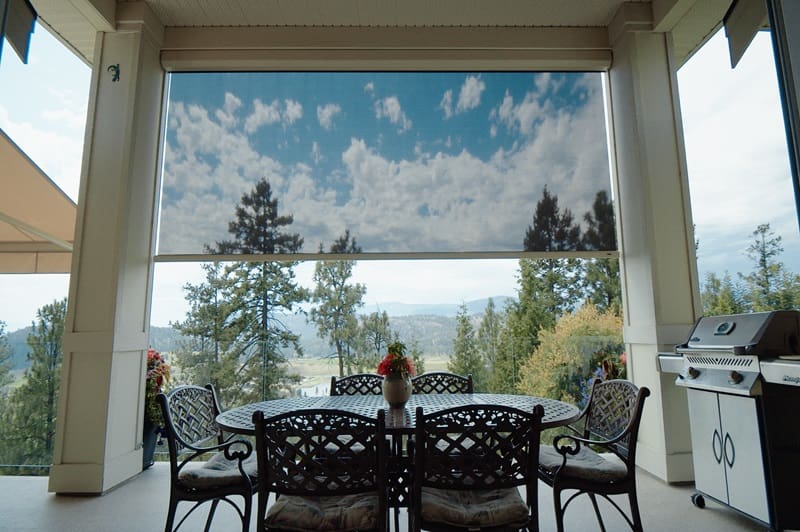
Solar Shade Installation Park City | Mountain Home UV Protection
Your Park City deck faces UV radiation 25% stronger than sea level. Discover how exterior solar shades protect your mountain investment while preserving those stunning Wasatch views.
At 7,000 feet elevation, your Deer Valley deck or Canyons Village patio absorbs 25% more ultraviolet radiation than homes at sea level (Source: National Oceanic and Atmospheric Administration, 2022). Add winter’s blinding snow reflection—which bounces back up to 80% of UV rays onto your covered outdoor spaces (Source: World Health Organization UV Index Guidelines, 2023)—and your luxury mountain contemporary home faces a UV assault that standard window treatments simply cannot address.
This is the reality for Park City homeowners: your expansive timber frame decks and outdoor living areas need exterior-grade solar shade systems engineered specifically for high-altitude conditions. While budget retailers focus on small interior windows, your investment in premium outdoor living demands solutions that match both the climate challenge and the architectural sophistication of Summit County’s finest properties.
Why High-Altitude UV Demands Specialized Solar Shades
Rocky Mountain Power customers throughout Park City understand that mountain living comes with unique energy challenges. But the UV factor often catches homeowners off guard—especially those relocating from coastal or low-elevation areas.
The Science Behind Park City’s Intense Sun Exposure
For every 1,000 feet of elevation gain, UV radiation increases approximately 4-5% (Source: Environmental Protection Agency SunWise Program, 2021). Your Park City home sits roughly 6,900 feet higher than Miami. That mathematical reality translates to furniture fading 3-4 times faster, skin damage accumulating during casual deck time, and interior temperatures spiking whenever afternoon sun hits your west-facing glass walls.
The Promontory community’s custom homes, with their signature floor-to-ceiling windows framing Jordanelle Reservoir views, face particular vulnerability. Without proper exterior solar screening, homeowners report indoor temperature swings exceeding 15 degrees between shaded and sun-exposed rooms—forcing HVAC systems to work overtime even during mild September afternoons.
Snow Reflection: The Hidden UV Multiplier
Fresh powder at Park City Mountain Resort reflects approximately 80% of UV radiation upward (Source: World Health Organization, 2023). Your covered patio isn’t protected just because it has a roof overhead—UV bounces up from snow-covered landscapes and penetrates from below. This phenomenon accelerates wear on outdoor cushions, decking materials, and any unprotected skin.
| Surface Type | UV Reflection Rate | Impact on Covered Patios |
|---|---|---|
| Fresh snow | 80% | Severe upward UV exposure |
| Aged snow | 50-60% | Moderate continued exposure |
| Concrete deck | 10-12% | Minimal reflection |
| Natural grass | 2-5% | Negligible impact |
Your exterior solar shades must address this multi-directional UV assault—something interior blinds physically cannot accomplish.
Exterior Solar Shade Solutions for Summit County Homes
The architectural character of Park City ranges from historic Main Street District miners’ cottages to the dramatic cantilevered mountain contemporary designs overlooking Deer Valley. Each style demands a different solar shade approach.
Motorized Exterior Screen Systems for Modern Mountain Homes
If your home features the clean lines and expansive glass walls typical of post-2010 Park City construction, motorized exterior solar screens offer the ideal balance of UV protection and view preservation. These systems mount outside your window envelope, blocking up to 97% of UV radiation before it ever reaches your glass (Source: Professional Awning Manufacturers Association, 2022).
- Wind-rated designs engineered for gusts exceeding 45 mph common at higher elevations
- Snow-load considerations with automatic retraction sensors for heavy accumulation
- Integration with smart home systems popular in Promontory and Deer Valley luxury properties
- Color options that complement natural timber, weathered steel, and stone exteriors
Rocky Mountain Power’s time-of-use rates make the cooling energy savings particularly valuable—exterior shades can reduce solar heat gain by 60-80%, cutting afternoon AC demand precisely when electricity costs peak (Source: U.S. Department of Energy Window Technologies Program, 2023).
Retractable Patio Covers for Ski Chalet Decks
Traditional ski chalet architecture throughout Old Town Park City features generous covered deck spaces designed for après-ski entertaining. These homes benefit from retractable pergola-mounted solar fabric systems that extend your outdoor season from late April through early November.
Unlike fixed awnings, retractable systems let you maximize winter sun exposure during those precious bluebird days after a Sundance Film Festival screening, then protect your space during the intense June-August UV peak when even short deck exposure risks sunburn.
Fixed Solar Screen Installations for Historic Properties
Main Street Historic District homes face additional considerations. Park City municipal services maintains strict architectural guidelines preserving the mining-era character. Fixed exterior solar screens in period-appropriate colors allow homeowners to achieve modern UV protection without compromising the aesthetic integrity that makes Old Town properties so valuable.
Selecting the Right UV Blocking Outdoor Shades for Your Property
Not all solar shade fabrics perform equally at altitude. Your selection process should prioritize these factors specific to Summit County conditions.
Fabric Performance Ratings That Matter
Look for exterior shade fabrics with documented openness factors between 1% and 5%. Lower percentages block more UV but reduce outward visibility. For Canyons Village homes where preserving ski run views matters, a 3% openness factor typically provides the optimal balance—blocking 94-97% of UV while maintaining clear sightlines to the mountain.
- Request UV transmission test data specific to the fabric weight you’re considering
- Verify the fabric carries a minimum 10-year warranty against UV degradation
- Confirm colorfastness ratings exceed 1,500 hours of accelerated weathering
- Check that mounting hardware is marine-grade stainless or powder-coated aluminum rated for freeze-thaw cycling
Budget products designed for sea-level installations often use inferior UV stabilizers that break down within 2-3 seasons at Park City’s elevation and UV intensity.
Installation Considerations for Mountain Environments
Your contractor must understand the specific challenges of Summit County installation. Rapid temperature swings—sometimes exceeding 40 degrees within a single day during spring and fall—stress mounting hardware and fabric tension systems. Proper installation accounts for thermal expansion, snow shedding angles, and integration with existing deck structures.
“The difference between a solar shade that lasts three years and one that performs for fifteen comes down to installation quality and material selection appropriate for the environment. Park City homeowners deserve contractors who understand mountain building science, not just basic shade mechanics.”
The Investment Case for Premium Sun Protection
High-net-worth homeowners throughout Deer Valley and Promontory recognize that exterior solar shades represent both protection and value enhancement.
Protecting Your Furnishing Investment
A single custom sectional for an expansive mountain contemporary great room often exceeds $15,000. UV exposure at Park City intensity can fade premium fabrics within 18-24 months without proper protection. Exterior solar shades that cost $3,000-$8,000 to install properly pay for themselves by extending furniture lifespan alone—before accounting for reduced energy costs and enhanced comfort.
Energy Savings With Rocky Mountain Power Rate Structures
Under Rocky Mountain Power’s current residential rate schedule, summer afternoon electricity costs significantly more than morning or evening usage. Exterior solar shades reduce cooling loads precisely during these peak-rate hours. Homeowners with south and west-facing glass walls report annual cooling savings of $400-$900 depending on home size and shade coverage area (Source: U.S. Department of Energy Residential Energy Consumption Survey extrapolation for mountain climate zones, 2022).
Enhanced Outdoor Living Season
Your Park City property likely represents a significant portion of your net worth. Maximizing usable outdoor days—currently limited by intense midday sun from May through September—effectively increases your living space. Proper solar shading can add 60+ comfortable outdoor hours per summer month to your deck or patio usage.
Why Park City Homeowners Choose Specialized Solar Shade Contractors
The luxury outdoor living market in Summit County demands expertise that general window covering retailers cannot provide. Your Deer Valley mountain contemporary or Old Town ski chalet deserves a contractor who:
- Maintains relationships with commercial-grade exterior shade manufacturers
- Understands Park City municipal building code requirements for exterior installations
- Carries proper licensing and insurance for elevated deck work
- Provides structural engineering consultation for large-span installations
- Offers ongoing maintenance programs accounting for seasonal weather impacts
When Sundance Film Festival transforms Main Street each January, your home should showcase the same attention to detail that defines Park City’s world-class reputation. Premium solar shades contribute to that aesthetic while solving the very real problem of high-altitude UV exposure.
Ready to protect your mountain investment? Schedule your Park City solar shade consultation today. We’ll assess your specific exposure patterns, architectural style, and outdoor living goals to recommend the ideal UV protection system for your home. Whether you’re in Canyons Village preparing for summer entertaining or a Promontory homeowner seeking year-round deck comfort, we deliver solutions engineered for Summit County’s unique demands.
Schedule your Park City solar shade consultation and discover how proper UV protection transforms your outdoor living experience.
Frequently Asked Questions
How long do exterior solar shades last in Park City's climate?
Quality exterior solar shades installed with proper hardware and UV-stabilized fabrics typically last 12-15 years in Summit County conditions. The key factors affecting longevity include fabric weight (heavier is better), UV stabilizer quality in the material, and whether mounting hardware is rated for freeze-thaw cycling. Budget installations using coastal-grade materials often fail within 3-4 seasons due to the combination of intense UV exposure and dramatic temperature swings unique to high-altitude mountain environments.
Can solar shades be installed on historic Old Town Park City homes?
Yes, with careful attention to Park City’s historic district guidelines. Fixed exterior screens in earth tones, dark bronze, or muted colors that complement the mining-era aesthetic typically receive approval. The key is working with a contractor familiar with the municipal review process and selecting mounting systems that minimize visible hardware. Many historic property owners opt for removable seasonal installations that provide summer UV protection while allowing full winter sun exposure without permanent exterior modifications.
Do exterior solar shades work during winter when sun angles are lower?
Winter sun angles in Park City drop significantly, causing direct sunlight to penetrate deeper into homes through south-facing windows. Exterior solar shades remain effective because they block UV radiation regardless of angle—and become especially valuable when snow reflection multiplies UV exposure from below. Many homeowners use motorized systems that adjust throughout the day, lowering shades during peak sun hours even in December and January while retracting them during overcast periods to maximize natural warmth and light.
What is the cost difference between interior blinds and exterior solar shades?
Exterior solar shade systems for Park City homes typically cost 3-5 times more than interior blinds for equivalent coverage area—ranging from $150-$400 per square foot installed versus $30-$80 for quality interior treatments. However, exterior systems block heat before it enters your home, reducing cooling costs by 60-80% compared to interior blinds that only manage light after solar heat has already penetrated. For homes with significant west-facing glass, the energy savings alone often justify the premium within 5-7 years.